


*Potential Spoiler Alert: This post may or may not contain minor-ish spoilers for My Struggle Book 1 by Karl Ove Knausgaard. But don’t let that stop you from reading this!*
How I discovered Knausgaard
A few years ago, I wrote a post about Haruki Murakami’s book What I Talk About When I Talk About Running on my blog. When I shared it with a few people, someone asked me if I knew about Knausgaard.
Unsure whether Knausgaard was a person or a thing, and too embarrassed to ask, I googled the word and discovered he was a writer.
Something about my writing in that post had caught the person’s eye. It had a Knausgaardian sensibility. I asked why this person thought my writing reminded him of Knausgaard.
It was the focus on the mundanity of everyday life and everyday events, he told me.
Karl Ove Knausgaard is a Norwegian author who shot to literary fame around 2010, first in Norway and then worldwide, through his nearly 3600-page 6-part novel titled My Struggle. If the name reminds you of another book by a certain early 20th-century German, you will be correct. Knausgaard named his book, intentionally, similar to Hitler’s autobiography, Mein Kampf. This was one of the major controversies that surrounded the book when it first came out, and I can imagine it must have also led to a lot of publicity.
Another controversy that surrounded him was Knausgaard’s blending of fact and fiction and the invisible line between them. My Struggle is an autobiographical novel focused on Karl Ove Knausgaard’s life and uses the actual names of all the people in his life, which, as one can imagine, did not go down well with the people. I think one of Knausgaard’s uncles sued him, or tried to sue him. The others, most likely, were not happy either.
But this boldness, which some might also call recklessness, is also what made the novel a great work of contemporary literature. Knausgaard played with the novel’s form precisely because he wanted to write something exceptional in an art form that has been around for centuries.
“[On literature] That is its sole law: everything has to submit to form. If any of literature’s other elements are stronger than form, such as style, plot, theme, if any of these overtake form, the result suffers. That is why writers with a strong style often write bad books. That is also why writers with strong themes so often write bad books. Strong themes and styles have to be broken down before literature can come into being. It is this breaking down that is called ‘writing.’ Writing is more about destroying than creating.” — Karl Ove Knausgaard, My Struggle Book 1
Minor personal aside, though: I think if you’re born with a name like Karl Ove Knausgaard, you are meant to become famous in some way or another. The name feels just too grand to die in obscurity. But I digress…
I bought the first book in the series a couple of years ago and read about a hundred pages before I abandoned it. I don’t quite remember why I didn’t finish it, because from what I remember, I was enjoying reading it. Maybe I got distracted by another book at the time, or fell into a sudden slump, or maybe the everydayness of life distracted me. But anyway, I had forgotten about it, and my copy kept getting buried deeper and deeper under the ever-increasing pile of unread books.
Until about a year ago, when I read an essay titled, Scraping training data for your mind, by Henrik Karlsson, in which he talked about Knausgaard’s Struggle.
Knausgaard, when still in his twenties and struggling to become a writer, was told by a friend that his writing felt empty, to put it simply. Knausgaard didn’t write anything for about 2 years, then read all of Proust’s 7-part novel In Search Of Lost Time, then went on to not write anything again for 2 years, until a publisher gave him a shot because why not, and he wrote a novel in a year or so, a novel which had a Proustian sensibility to it. That novel became Knausgaard’s first published novel.
I think it was this story that got me even more interested in Knausgaard and the lore surrounding My Struggle. Readers of this blog—Substack?—will know that I myself have been trying to write my first novel for the past few years. Readers will also know that I have been quite unsuccessful in writing it so far. The writing, according to my own recent review of it, feels empty, a pointless need for self-expression that I might have outgrown.
So then one day I thought, what if I do what Knausgaard did? What if I also drown myself in a long reading project, and then, as I emerge from the deep dark waters, maybe some new neural connections in my brain will lead to an improved writing craft? The idea, the thought, did not feel entirely stupid.
And so I thought, let’s go for it—let me read the entire 6-book 3600-page series called My Struggle by Karl Ove Knausgaard.
But not only that, let me also read what inspired Knausgaard: Maybe, just maybe, I should read Proust’s In Search Of Lost Time? I mean, why not? Celine Nguyen’s essay, no one told me about proust, certainly makes you want to read it. But we’ll see what happens…
So that’s my preamble, an introduction, of sorts, to how I ended up reading this book.
And now, about the book.
Book 1 of My Struggle is split into two parts of Knausgaard’s life: One part about his teenage years and his teenage adventures living in Norway, and the other part about his late 20s, almost 30, where he is dealing with the news of his father’s death.
But throughout the book, throughout the two phases of Karl Ove’s life, the book deals primarily with the relationship between Karl Ove and his father.
When I say Karl Ove, I’m talking about Karl Ove the character in the book, and not Karl Ove the real person who wrote the book. Because even though the novel is autobiographical, it is still a novel. It is still placed in the fiction section of the bookstore. And so, since I don’t know Karl Ove the writer, I don’t want to make any assumptions about him and certainly do not feel either qualified or interested in commenting on his character or judging his life choices. But the character in the novel, Karl Ove, I feel comfortable judging. Case in point:
“Clothes off, water on, steaming hot, over my head, down my body. Should I beat off? No, for Christ’s sake, Dad’s dead.” — Karl Ove Knausgaard, My Struggle Book 1
If you read the novel, you will judge him too. Because he is not a hero. He is not someone you can idealize. He is a flawed character—which is the best kind of character, isn’t it?—that is dealing with many different strands of emotions and issues all through the years, sometimes all at the same time: art, relationships, marriage, family, friends, and so on.
“As I sit here writing this, I recognize that more than thirty years have passed. In the window before me I can vaguely make out the reflection of my face. Apart from one eye, which is glistening, and the area immediately beneath, which dimly reflects a little light, the whole of the left side is in shadow. Two deep furrows divide my forehead, one deep furrow intersects each cheek, all of them as if filled with darkness, and with the eyes staring and serious, and the corners of the mouth drooping, it is impossible not to consider this face gloomy. What has engraved itself in my face? Today is the twenty-seventh of February. The time is 11:43 p.m. I, Karl Ove Knausgaard, was born in December 1968, and at the time of writing I am thirty-nine years old. I have three children – Vanja, Heidi, and John – and am in my second marriage, to Linda Boström Knausgaard. All four are asleep in the rooms around me, in an apartment in Malmö, where we have lived for a year and a half.” — Karl Ove Knausgaard, My Struggle Book 1
In the teenage years, you see Karl Ove’s father as a dominating man who seems not to like Karl Ove much, but then you see other times when he seems to be trying to make an effort to get closer to Karl Ove. In one scene early in the novel, you see how Karl Ove tries to calculate where and how his father might be sitting in the living room at night and what mood he might be in so that Karl Ove could go tell his father about a face he saw in the water that day.
In his adulthood, though—thirty years old, married, about to have his first book published—as he learns of his father’s death, you can see the conflicted emotions Karl Ove feels. You see him disliking, even hating, his father. There is a moment when he feels happy and relieved that his father has died. But at the same time, you see him crying endlessly as he and his brother clean the house where their father died. You see the anger and pity he feels about the way his father had died and the way he had lived his last few years: cut off from all family, divorced, unemployed, alcoholic, living in isolation in his mother’s, Karl Ove’s grandmother’s, house, who had found him dead in a chair.
“My picture of my father on that evening in 1976 is, in other words, twofold: on the one hand I see him as I saw him at that time, through the eyes of an eight-year-old: unpredictable and frightening; on the other hand, I see him as a peer through whose life time is blowing and unremittingly sweeping large chunks of meaning along with it.” — Karl Ove Knausgaard, My Struggle Book 1
This novel is an exploration of a relationship, primarily—a book a son wrote about his father and the complicated relationship they had, not only until the death of the father but beyond. With that as the scaffold, the book explores the world, people in that world, and art created by those people, with meandering thoughts and philosophies Karl Ove has in between the mundane events of his daily life.
Reading Knausgaard’s writing feels like the reader is in the room with the characters. He has a penchant for describing the most mundane events with such beauty and pace that the page comes alive in front of you. You are not simply reading a story; you are living in the story. You are not just reading about characters, you are there with the characters, seeing and feeling everything they see and feel, seeing and feeling everything they do.
Many pages in the first half of the book are dedicated to a single night where a teenage Karl Ove tries to smuggle some bottles of beer with his friend to a party on New Year’s Eve that a girl he likes had thrown. In the second half of the book, many pages are dedicated to the act of Karl Ove cleaning the house left in squalor by his father, his grandmother still living in it, and the prose endlessly goes into a detailed act of cleaning, and drinking, and driving and funeral arrangements, and seeing the alcoholic father’s cold dead body, and seeing the squalid state of the still-alive-but-senile grandmother.
“The table lay under a film of water; the seat covers were dark with moisture. Plastic bottles lying on their sides on the brick floor were dotted with raindrops. The bottlenecks reminded me of muzzles, as if they were small cannons with their barrels pointing in all directions. Raindrops hung in clusters along the underside of the wrought-iron fence. Now and then one let go and fell onto the wall beneath with an almost imperceptible plop. That Dad had been here only three days ago was hard to believe.” — Karl Ove Knausgaard, My Struggle Book 1
For some people, it is this detailed prose that is a criticism of Knausgaard’s writing. For most people who have read and enjoyed his writing, though, it is precisely this kind of prose that feels a joy to read. Reading Knausgaard reminded me of Richard Linklater’s Before Trilogy, especially the second movie in the series: Before Sunset.
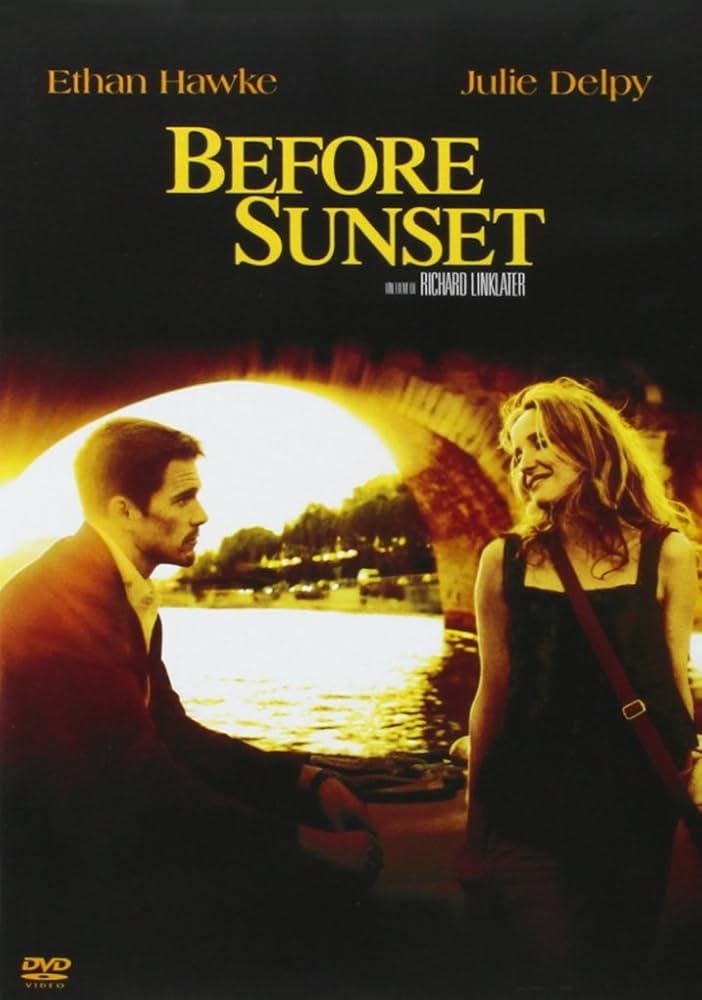
In an interview for the movie, Richard Linklater recalls talking to Ethan Hawke while making the movie—Hawke, unsure about what they were making, tells Linklater that they might be making a really boring movie because all they seem to be doing is sitting and talking and walking and talking. And Linklater tells Hawke that he has been watching them talk for hours, days, and he hasn’t been bored even for a second. Those who have watched the trilogy and have loved it know what Linklater was talking about.
I feel something similar about Knausgaard’s My Struggle, at least so far. I have only read the first book in the series.
In the book, Knausgaard talks about the ambition he felt for writing something exceptional one day. The book sold over half a million copies in Norway by the early 2010s, a country with a population of about 5 million people, and it has been translated into over 30 languages. He did succeed in his ambition. And so far, nearly 500 pages in, I am enjoying the ride. Only 3000 more pages to go…
“I have always had a great need for solitude. I require huge swathes of loneliness and when I do not have it, which has been the case for the last five years, my frustration can sometimes become almost panicked, or aggressive. And when what has kept me going for the whole of my adult life, the ambition to write something exceptional one day, is threatened in this way my one thought, which gnaws at me like a rat, is that I have to escape. Time is slipping away from me, running through my fingers like sand while I … do what? Clean floors, wash clothes, make dinner, wash up, go shopping, play with the children in the play areas, bring them home, undress them, bathe them, look after them until it is bedtime, tuck them in, hang some clothes to dry, fold others, and put them away, tidy up, wipe tables, chairs, and cupboards.” — Karl Ove Knausgaard, My Struggle Book 1
Well written Yash! I enjoyed reading this and I hope the experiment goes well for you!